Designing interfaces at the atomic scale.Defining device function and reliability. 原子スケールで界面を設計する。それがデバイスの機能と信頼性を決める。

Atomistic simulation, first-principles interface design, microstructure-level composite joints, and process-level innovation — four pillars of a single research stack for next-generation electronics devices. 原子レベルのシミュレーション第一原理計算による界面設計微細組織レベルの複合接合、そして プロセス革新。次世代エレクトロニクスデバイスに向けて、これら4つを貫く研究スタックを構築しています。

01 / Atomistic Simulation

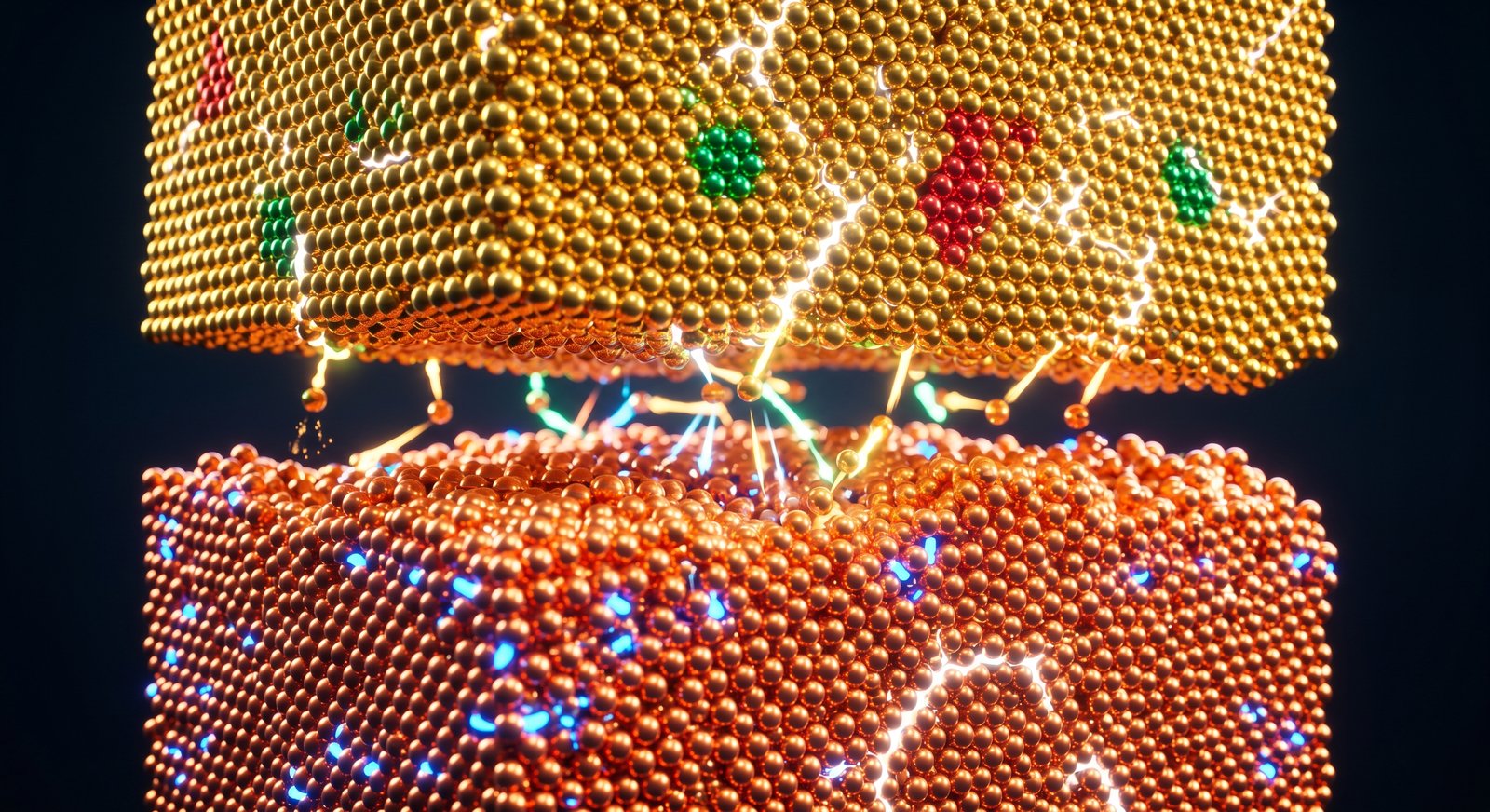
Atomistic simulation of solid-state bonding 固相接合の原子レベルシミュレーション

Cu-to-Cu solid-state bonding is a key enabler of 3D semiconductor packaging, but its underlying atomistic mechanisms — surface nanostructures, grain boundaries, and crystallographic orientation effects — remain poorly understood at the continuum level. Using molecular dynamics on supercomputers including Fugaku, we resolve how atoms reorganize during bonding and translate those insights into design rules for real interfaces. Cu–Cu 固相接合は三次元半導体実装を支える基盤技術でありながら、その背景にある原子レベルの機構 — 表面ナノ構造、結晶粒界、結晶方位 — はマクロな解析からは見えにくい領域です。富岳をはじめとするスーパーコンピューターを用いた分子動力学シミュレーションにより、接合中の原子再配列を分解し、その知見を実材料の界面設計指針に橋渡しすることを目指しています。

Molecular dynamics Cu–Cu bonding Twin boundaries Surface nanostructures 3D packaging Fugaku
Atomistic simulation of solid-state bonding between two crystals Atomistic Simulation
02 / First-Principles Design

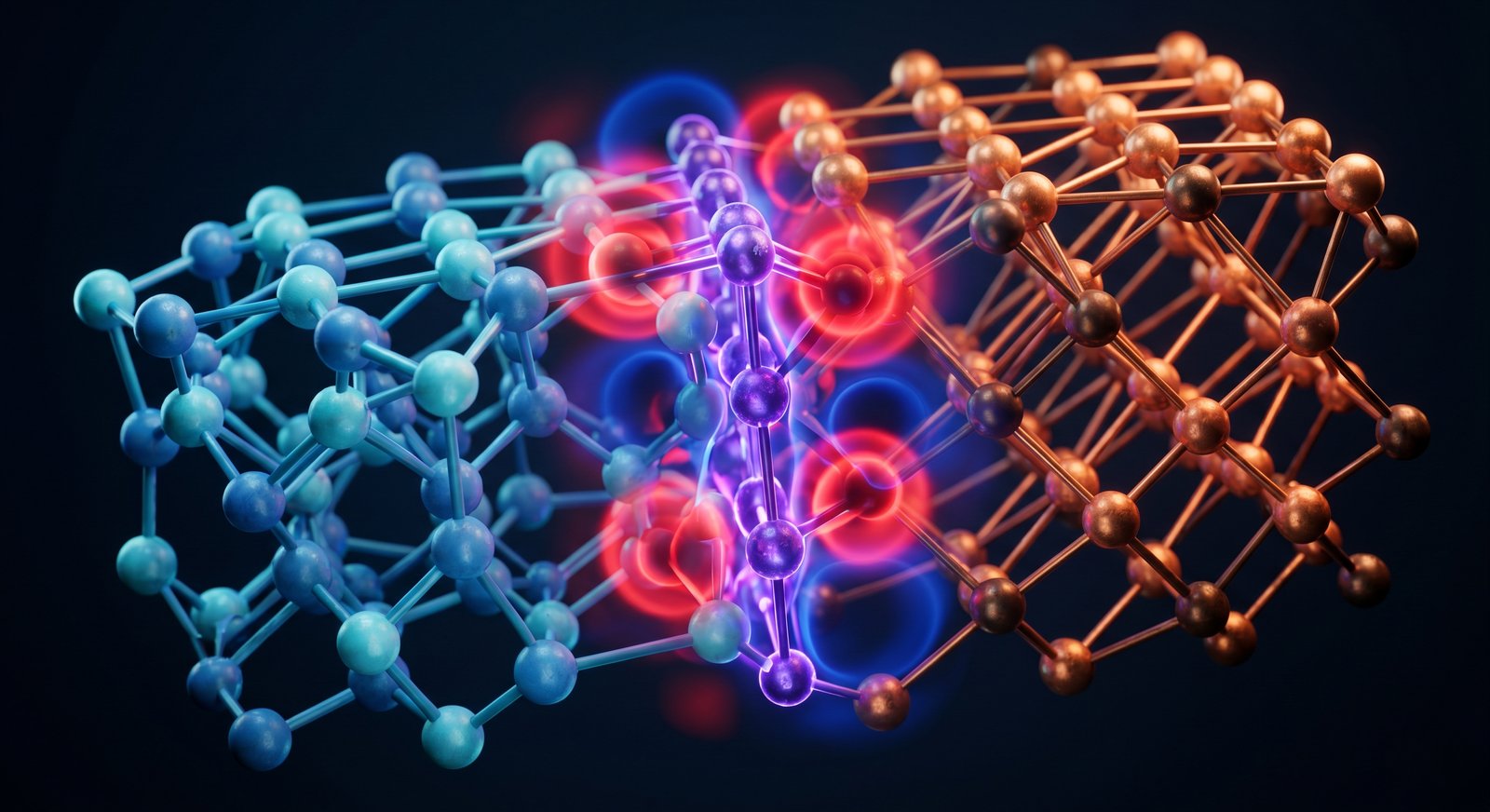
First-principles design of heterointerfaces 第一原理計算による異材界面設計

Power-module substrates rely on metal/ceramic interfaces — Cu bonded to Si₃N₄, AlN, and others — that must withstand thermal cycling and high voltages over a device lifetime. We combine density functional theory with carefully designed experiments to reveal the atomic-scale interface structures that give the strongest, most reliable bonds, then translate those findings into deposition-based bonding schemes for next-generation substrates. パワーモジュール基板に求められる金属/セラミック接合界面 (Cu/Si₃N₄、Cu/AlN など) は、長期間の熱サイクルや高電圧環境に晒され続けます。私たちは密度汎関数理論 (DFT) と実験を組み合わせることで、最も強く、信頼性の高い接合を生む原子スケール界面構造を明らかにし、その知見を成膜ベースの接合プロセスに展開しています。

DFT Cu / Si₃N₄ Active-metal mediation Power-module substrates Adhesion energy
First-principles design of heterointerface electron density DFT & Experiment
03 / Composite Joints

Composite joints for next-generation electronics devices 次世代エレクトロニクスデバイス向けの複合接合

From wide-bandgap semiconductors to high-density 3D packages, next-generation electronics devices push joints into thermal, mechanical, and electrical regimes that exceed the limits of conventional solder. We aim to realize composite microstructures — sintered joints with dispersed micropores, transient-liquid-phase (TLP) sintered Cu/solder skeletons, and porous Cu/solder hybrids — that let us control multiple properties such as stiffness and thermal conductivity. ワイドギャップ半導体から高密度 3D 実装まで、次世代エレクトロニクスデバイスは従来はんだの限界を超えた熱的・機械的・電気的に過酷な環境を要求します。私たちは、微小気孔を分散配置した焼結接合構造、TLP (Transient Liquid Phase) 焼結による Cu/はんだ骨格構造、ポーラス銅/はんだのハイブリッド構造など、剛性や熱伝導などの諸特性を制御できる複合微細組織の実現を目指しています。

TLP sintering Cu–solder microcomposite Porous Cu Micropore engineering SiC die-attach Thermal cycling
Composite joint microstructure for next-generation electronics devices Micro Joining
04 / Process Innovation

Process innovation in microjoining マイクロ接合のプロセス革新

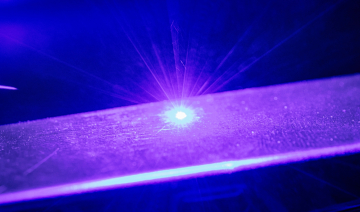
However excellent the joint material, the process that shapes it cannot be ignored. We develop new soldering processes — orientation-controlled soldering enabled by heteroepitaxial growth, and highly efficient blue-laser soldering that produces localized, distinctive thermal fields — to advance device function and reliability. どれほど優れた接合材料も、それを形作るプロセスを無視することはできません。私たちは、ヘテロエピタキシャル成長を活用した結晶方位制御はんだ付や、局所的かつ特異な温度場を実現できる高効率ブルーレーザはんだ付など、デバイスの高機能化と高信頼化に資する新しいはんだ付プロセスを開発しています。

Blue-laser soldering Localized thermal field Heteroepitaxial growth Solder orientation Microstructure control
Interfacial joining and process innovation Interfacial Joining

Understanding and controlling at the atomic scale.Realizing the next device. 原子スケールで理解し制御する。それが次のデバイスを実現する。

See all publications論文一覧へ Discuss collaboration共同研究について